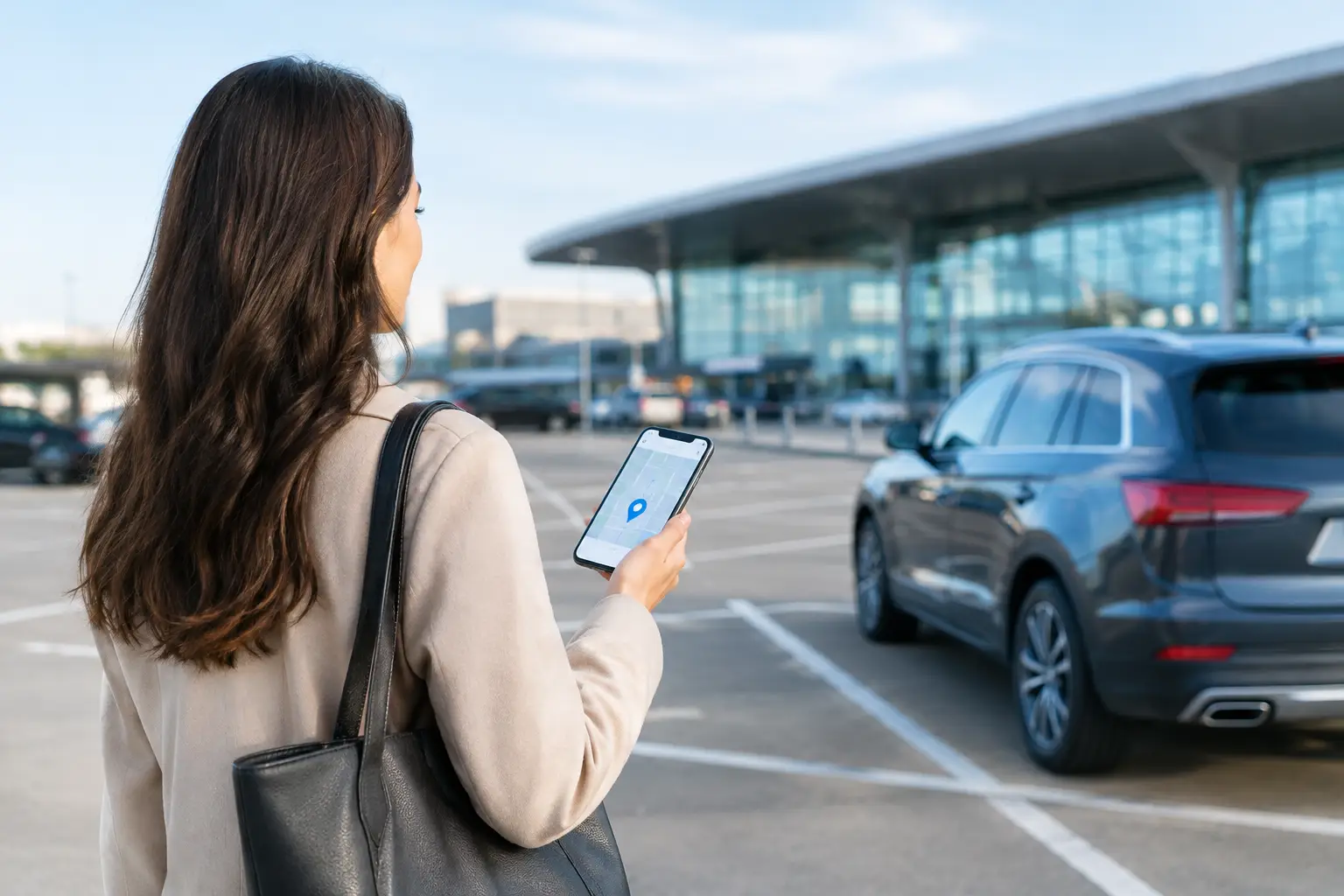
A meeting starts in 10 minutes. The concert gates are about to open. Your flight leaves before sunrise. In moments like these, why reserve parking is not really a question about a parking space. It is a question about whether the last part of your trip feels controlled or chaotic.
A reserved spot gives you an answer before traffic, crowds, and full garages create a problem. You know where you are going, what it costs, and what to expect when you arrive. That small bit of certainty can change the whole trip.
Why Reserve Parking? It Saves More Than Time
The most obvious benefit of reserving parking is time. Instead of circling blocks, entering full garages, or comparing prices at the curb, you head toward a known location. That matters when you are commuting, catching transportation, visiting a busy neighborhood, or arriving for a scheduled event.
But the time saved is not only the minutes spent driving around. It is the buffer you get back. A driver with a confirmed space can leave with a more realistic arrival plan. A parent does not have to unload kids in a rush. A traveler can walk to the terminal without wondering whether the lot will be full. A customer can focus on the appointment rather than the hunt for a place to park.
Parking uncertainty also creates expensive decisions. When the closest lot is full, you may settle for a higher-priced garage, park farther away than planned, or risk a spot with confusing restrictions. Reserving ahead gives you the chance to compare options before you are under pressure.
That does not mean every quick stop needs a reservation. If you are visiting an area with plenty of open, low-cost parking, booking ahead may not add much value. The benefit rises when demand is high, timing matters, or the destination has limited nearby spaces.
A Reliable Spot Makes Busy Places Easier
Popular areas rarely become easier to park in once you arrive. Downtown business districts fill during work hours. Stadiums and venues create demand in short, intense windows. Airports have predictable rush periods. Hospitals, campuses, beaches, and neighborhood festivals can all turn parking into the hardest part of an otherwise simple trip.
A reserved space is useful because it removes the need to compete at the last minute. You are not relying on luck, an open street space, or a garage sign that may change from available to full by the time you enter.
For frequent drivers, this can become a practical routine. Someone who drives to the same office two or three days a week may value knowing where they will park each morning. Someone who regularly visits a family member near a hospital may want a dependable option close by. The trip is familiar, but the parking challenge can still be unpredictable without a plan.
The value is even clearer when you are unfamiliar with the area. A reserved spot gives you a destination to navigate to, rather than forcing you to make quick decisions on streets you do not know. You can review the location, access details, and walking distance while you still have time to choose what works.
The Real Benefit Is Less Friction
Parking is usually not the purpose of a trip. It is the step between the road and what you came to do. When that step goes badly, it affects everything after it.
Arriving late can mean missing the beginning of a game, walking into a meeting stressed, paying more than expected, or starting a date night with an argument about where to leave the car. Even when the delay is short, it can make the destination feel less convenient than it should.
Reserving parking reduces those small points of friction. You have an expected location. You have a plan for arrival. You can better judge how much walking is involved and whether the space fits your schedule. For many drivers, that is worth more than finding the absolute cheapest option at the last second.
Convenience has a practical side, too. A spot closer to your destination may be useful when you are carrying equipment, groceries, luggage, or supplies. It can matter for drivers traveling with children, older adults, or anyone who cannot easily make a long walk from a distant lot.
Better Planning Starts Before the Drive
When you reserve, you can make a parking choice based on your actual needs instead of whatever is left. Price matters, but it is not the only factor. Think about the arrival time, departure time, vehicle size, access instructions, and distance from your destination.
A space that looks inexpensive may not be the best fit if it is too far away or unavailable for the full length of your visit. A slightly higher-priced spot may make more sense if it is closer, easier to enter, and available when you need it. The right choice depends on the trip.
It also helps to leave a little room in your schedule. Reservations can provide confidence, but traffic, road closures, and event congestion can still affect your arrival. Check the space details before you leave, follow any access instructions, and make sure the booking covers the time you expect to be there.
If plans change, review the cancellation or modification terms before you book. Flexibility varies by space and provider. A reservation is most useful when it fits both your schedule and your ability to adjust if something unexpected happens.
Why Drivers Choose Local, Private Spaces
Traditional garages and lots are not the only places where a driver may find parking. Many neighborhoods, homes, apartment buildings, and local businesses have spaces that sit empty for part of the day. A driveway might be open while its owner is at work. A business may have unused capacity outside peak hours. A property near a venue may be perfectly located for visitors.
That is where a peer-to-peer marketplace can make existing space more useful. Instead of building another garage, it connects an available spot with someone who needs one nearby. Your space. Their need. One spot.
For drivers, this can mean more choices close to where life happens. For space providers, it can turn an overlooked driveway, lot space, or designated area into income. The exchange works best when expectations are clear: accurate location details, honest availability, simple access information, and respect for the property.
Providers should also consider whether their space is appropriate to offer. Local rules, lease terms, homeowners association requirements, insurance considerations, and property access restrictions can vary. A good listing is not just an empty area. It is a space that can be used safely and clearly by the person booking it.
Reserving Is Especially Useful for These Trips
Some trips have more parking risk than others. Reserving ahead is often worthwhile when you are heading to an airport, a sporting event, a concert, a convention, a downtown appointment, or a hospital visit. It can also be helpful for regular work commutes in high-demand areas and overnight stays where street parking is limited.
The common thread is simple: there is a cost to being wrong. If no spot is available nearby, you lose time, pay more, walk farther, or miss part of what you came to do.
For a casual visit at an off-peak time, you may decide to take your chances. For a trip with a fixed start time or a hard-to-reach destination, reserving shifts the odds in your favor. It replaces guesswork with a specific plan.
A Small Booking Can Protect a Bigger Plan
Parking may be one of the smallest details of a trip, but it has outsized influence on how the day begins. A confirmed spot can help you arrive calmer, stay on schedule, and avoid paying for a problem that could have been handled earlier.
Before your next busy trip, look at parking the same way you look at directions or a reservation: as a practical part of getting where you need to go. The right spot is not just a place to leave your car. It is room to arrive ready.