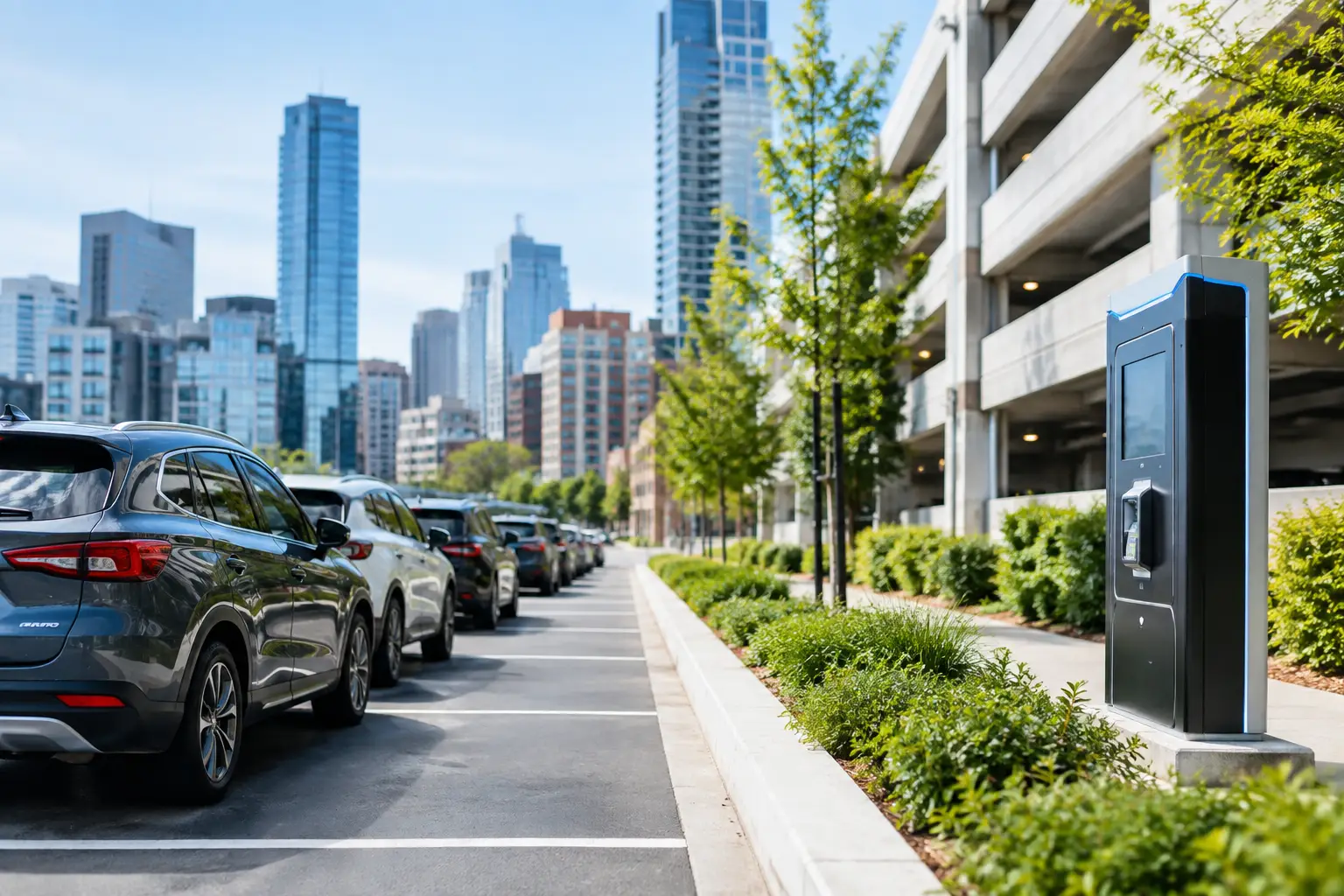
A parking problem can begin just two blocks from the destination. The garage is full, street rules are unclear, and circling costs time before the appointment, shift, game, or dinner has even started. This urban parking solutions guide focuses on a simpler answer: match available local space with the people who need it.
For drivers, the goal is not merely a place to leave a car. It is a dependable arrival plan. For homeowners, landlords, and businesses, the opportunity is to put an overlooked driveway, lot space, or private parking area to work when it would otherwise sit empty.
Why city parking stays difficult
Cities have plenty of parked cars and plenty of underused space, but those two facts do not always meet. A private driveway may be empty during a weekday. A small business may have open spaces after closing. An apartment building may have a spot that is unused while a tenant travels. Meanwhile, a driver near a hospital, downtown office, campus, or entertainment venue may have no clear option nearby.
Traditional parking systems can also be hard to read. Street signs change by block and time of day. Public garages may fill quickly or charge more than expected during peak demand. A space that works for a quick errand may not work for an eight-hour shift, an overnight stay, or a larger vehicle.
The practical solution is not one giant parking facility. It is better use of the space that already exists, with clear details before either side commits.
Urban parking solutions guide: start with the real need
The best parking choice depends on why someone is traveling, how long they will stay, and what matters most at that location. A driver going to a medical appointment may value a short walk and a guaranteed return time. A commuter may care more about a predictable daily rate. Someone attending a stadium event may accept a longer walk if getting out afterward is easier.
Before reserving or offering a space, get specific about the basics: arrival window, departure window, vehicle size, access method, and walking distance. Those details prevent most frustrating mismatches.
A compact car can fit in places that will not suit a full-size pickup or SUV. A daytime space may be unavailable overnight. A location behind a gate may require instructions that are simple enough to follow in the dark or when traffic is moving. Clear expectations matter more than fancy features.
For drivers: prioritize certainty over circling
When parking is tight, the cheapest option is not always the best value. A lower price can disappear quickly if it means arriving late, driving around several blocks, or paying for a rideshare from a distant lot. Consider the full cost: parking price, walking time, fuel, stress, and the chance that no space will be open when you arrive.
Start by choosing the area you actually need, rather than searching an entire city. Near a transit stop, office district, airport, hospital, campus, or event venue, a private spot can be more useful than a general garage several blocks away. Check whether you need hourly, daily, overnight, or recurring access. A dependable recurring arrangement can remove a daily decision from a regular commute.
Drivers should also look for practical access details. Is the spot a driveway, assigned stall, covered area, or open lot? Is there enough room to enter and exit without blocking another vehicle? Are instructions available for gates, lighting, or shared entrances? The right spot is one you can use confidently, not one that creates a new problem at arrival.
For space owners: identify what is truly available
An unused space has value when it is available at times people need it and can be described honestly. That may be a residential driveway near a busy downtown corridor, a spare apartment parking space, or a business lot that is open during evenings and weekends.
Begin with the physical facts. Measure the usable area and think about turning radius, low clearances, gates, and whether another vehicle needs to pass through. A spot that is easy for a sedan but difficult for larger vehicles should be listed that way. It is better to attract the right match than to promise more than the space can deliver.
Then define the schedule. Some owners can offer weekday daytime access; others may have evenings, weekends, or overnight availability. Consistency is valuable. A driver who knows a spot will be open every Tuesday through Thursday has a strong reason to return.
Also check the rules that apply to the property. Lease terms, homeowner association rules, local regulations, and insurance requirements can vary. Owners should understand what they are permitted to offer before making a space available. A simple opportunity works best when it is set up responsibly from the start.
Match the spot to the destination
Distance matters, but convenience is more than a map pin. A spot one block away with a clear entrance may be better than one closer that requires a confusing detour. The same is true after an event or at the end of a late shift, when a well-lit, straightforward walk can make a meaningful difference.
For a commuter, the best match may sit near a reliable transit connection rather than directly outside the office. For a restaurant guest, an evening space with easy exit access may be more useful than all-day parking. For a resident hosting visitors, a nearby private driveway can solve a temporary need without asking guests to hunt for street parking.
This is where local, peer-to-peer availability changes the equation. Instead of treating parking as a one-size-fits-all commodity, it makes room for purpose-fit choices. Your space. Their need. One spot.
What makes a parking spot dependable
Dependability comes from clear information and follow-through. A good parking arrangement should answer basic questions before the driver arrives: where the space is, when it is available, what vehicle it fits, and how to access it.
For owners, clear photos and plain-language directions reduce confusion. Mention landmarks, driveway position, numbered stalls, gates, and any parts of the property that must remain clear. If the space is shared, explain where the guest should park so no one is blocked in.
For drivers, reliability also means respecting the agreement. Arrive within the reserved window, use only the designated area, and do not assume an adjacent space is included. A good experience makes future access easier for everyone.
Communication should be short and useful. A message confirming an arrival time or asking one access question is helpful. Long back-and-forth exchanges usually signal that the listing needs clearer details. The strongest arrangements feel simple because the important information was handled early.
Price for the place, the time, and the demand
Parking prices are shaped by location, timing, access, and local demand. A space near a major venue may be worth more during an event than on a quiet weekday. A reserved commuter space can be valuable because it removes uncertainty, even if it is not the closest option on the block.
Owners do not need to chase the highest possible price every day. A fair rate that reflects the location and produces repeat demand can be more practical than frequent changes. Consider nearby alternatives, the walk to common destinations, whether the space is covered or gated, and the hours available.
Drivers should compare options based on usefulness, not price alone. A convenient spot with clear access may save enough time to justify a modest premium. On the other hand, a longer walk can be a smart trade-off for a low-cost all-day stay. The right answer depends on the trip.
Make unused space part of the local solution
The most effective urban parking solutions do not require more pavement. Often, they require better visibility into the spaces that already exist. A vacant driveway during work hours and a nearby driver looking for a reliable place to park are not opposing problems. They are a match waiting to happen.
For owners, start small with the hours and vehicle types you can support comfortably. For drivers, plan around the locations you visit most often and choose clarity over last-minute guessing. Spot-Me.us is built around that direct exchange: available space meets a real local need.
A better parking routine can start with one usable spot, one clear schedule, and one less trip around the block.