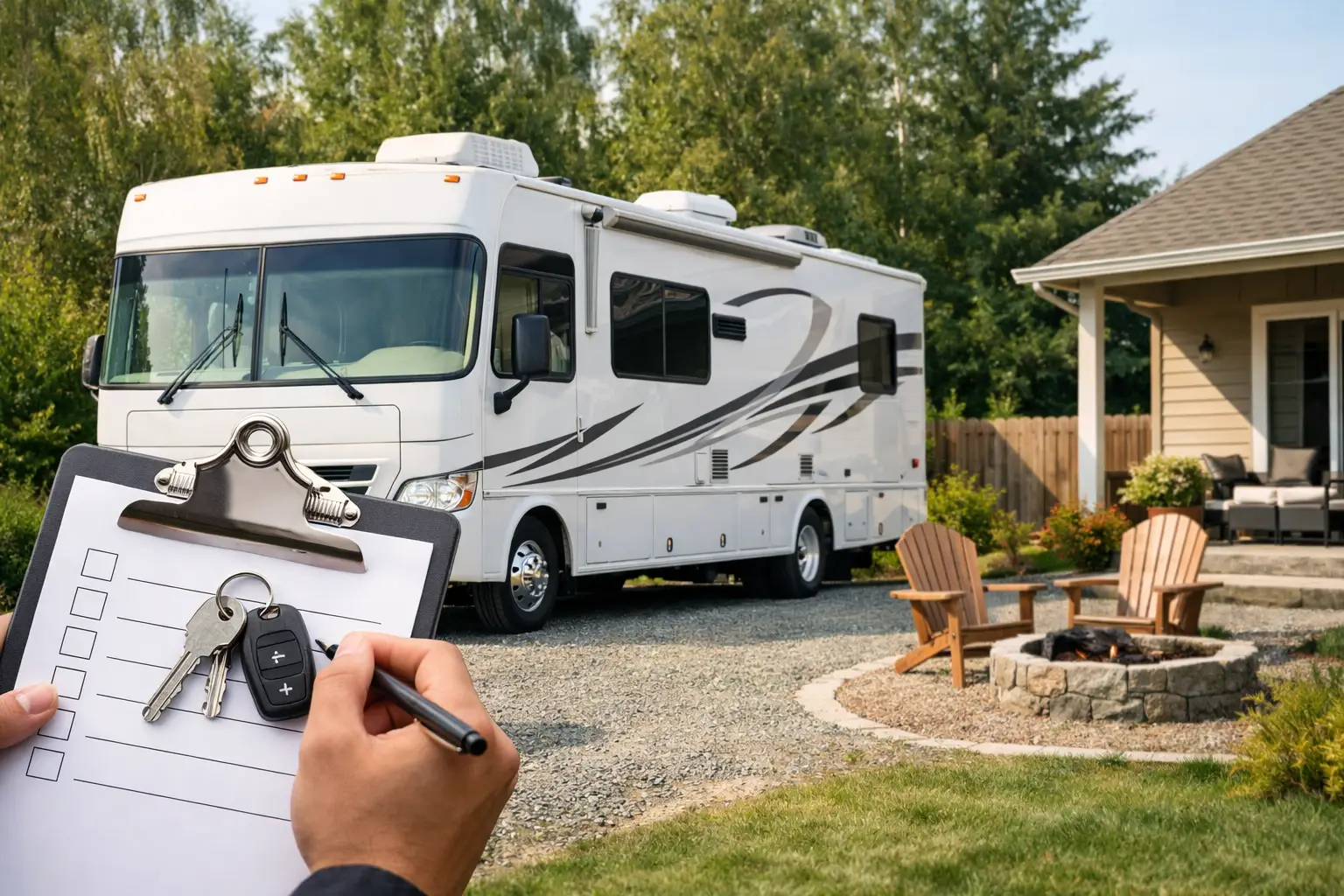
A side yard, long driveway, unused gravel pad, or extra acreage can look like an easy answer to RV parking on private property. Sometimes it is. But an RV takes more than open space. It needs a legal use, a practical route in and out, solid ground, and clear expectations between the person providing the spot and the person using it.
For property owners, the opportunity is straightforward: an underused area may meet a real local need. For RV owners, a private spot can be more convenient and flexible than crowded campgrounds or limited public storage. The right match starts before the RV arrives.
RV parking on private property starts with local rules
The biggest question is not whether an RV physically fits. It is whether local rules allow it.
Cities, counties, and towns often treat RVs differently depending on how they are used. Parking an unoccupied RV for short-term storage may be allowed where living in it is not. A homeowner might be able to keep their own RV in a driveway but be restricted from renting space to someone else. Rules can also change based on zoning, lot size, setbacks, road frontage, and whether the vehicle is visible from the street.
Do not assume a rural address means there are no restrictions. Likewise, do not assume a paved suburban driveway is automatically approved for long-term RV storage. Check the local zoning or code enforcement rules for the property address, then review any homeowners association, condominium, lease, or deed restrictions that apply.
The distinction between parking, storage, and occupancy matters. If someone sleeps in the RV, receives mail there, hooks up utilities as a residence, or stays for an extended period, the arrangement may be regulated differently from simple vehicle parking. Be direct about the intended use from the beginning.
A good spot is more than an empty patch of land
An RV space has to work on arrival day, not just look adequate on a map. Length, height, turning room, and surface condition all matter. A travel trailer may need room to be backed in and detached. A larger motorhome may need broad turns, overhead clearance, and a straight path that avoids tight gates, low branches, utility lines, and parked cars.
Before offering a space or booking one, consider the actual route from the public road to the parking area. A narrow driveway can be manageable for a car and impossible for a 35-foot trailer. Soft ground can hold up in dry weather but become a problem after rain. Steep grades, drainage ditches, loose gravel, and sharp turns create risks that are easy to miss during a quick walkthrough.
A useful site check covers at least these practical details:
- The maximum RV length, width, and height the entry and space can handle.
- The surface type and whether it stays stable in rain, heat, and winter conditions.
- Gate width, turning radius, overhead obstacles, and clearance from buildings or fences.
- Access hours, whether the spot is shared, and who can move vehicles blocking the route.
Photos help, but measurements are better. Owners should describe the space as it is, not as they hope it will work. RV drivers should provide the full length of the RV, including trailers, tow vehicles, bikes, racks, and slide-out needs where relevant.
Decide what the spot includes
Private RV parking can mean several different things. It may be a secure place to store a parked vehicle. It may be an overnight space with permission to stay inside the RV. Or it may be a more equipped site with power, water, or waste connections. Each version carries different costs, responsibilities, and possible regulations.
For many owners, simple storage is the cleanest starting point. The RV is parked, access is defined, and no utilities or overnight use are included. That can serve owners who need a dependable place between trips without turning a property into a campground.
If utilities are offered, spell out the details. Is electrical service available, and what type of outlet is provided? Is water available year-round? Is there an approved sewer connection, or is dumping prohibited? A standard household outlet is not the same as a dedicated RV hookup. Promising more than the property can safely provide leads to frustration and avoidable damage.
For drivers, the same rule applies: confirm what is included before arrival. A parking spot is not automatically a campsite. Never assume overnight occupancy, generator use, dumping, package delivery, or guest access is permitted just because the RV fits on the property.
Set clear terms before the keys change hands
The most useful arrangements are simple because the expectations are simple. Agree on the rate, dates, payment timing, access method, and cancellation terms. Then address the day-to-day details that tend to create conflict if they are left unspoken.
For example, can the driver access the RV at any hour? Are they allowed to perform maintenance on site? Can they run an engine or generator? Is washing allowed? Who is responsible if an RV leaks fluids, damages a gate, blocks a shared drive, or needs to be towed after a breakdown?
Property owners should also establish reasonable conduct and safety rules. That may include a speed limit on the property, no open flames, no repairs involving hazardous materials, no storage outside the RV, and no use of the space as a residence unless specifically allowed. Drivers should understand that a private property owner may need notice before visits, especially where access passes near a home, business entrance, or shared tenant area.
Written terms do not need to read like a commercial lease to be useful. Plain language is often best. The goal is to prevent assumptions, protect both sides, and make the arrangement easy to manage.
Safety and insurance deserve a real conversation
A private space can feel informal, but the risks are real. Large vehicles can damage pavement, landscaping, fences, drainage systems, and overhead lines. They can also create visibility issues near roads and driveways. Owners should consider lighting, secure gates, clear boundaries, and whether emergency vehicles could still access the property.
Insurance is another reason to be precise. An RV owner should maintain appropriate coverage for the vehicle and its contents. A property owner should review their own policy and ask how allowing paid RV parking or storage could affect coverage. The answer varies by policy, location, frequency, and the services offered. Do not rely on assumptions or a casual verbal promise that "it will be fine."
Security should be described honestly too. A locked gate, camera, fenced lot, or visible home can be valuable features, but none guarantees protection from theft, weather, or accidental damage. State what security measures exist without overstating them.
Price the space around its real value
Not every private RV spot should be priced the same. A basic outdoor storage space with limited access is different from a paved, gated location near a popular destination. Convenience, access, size, surface quality, security, and included utilities all affect what a space is worth.
Owners should also account for the cost of making the space available. There may be gate wear, landscaping maintenance, snow removal, lighting, insurance considerations, or time spent coordinating arrivals. A fair price supports a reliable arrangement. Pricing too low can create more demand than the property can comfortably handle, while pricing too high without clear benefits can leave a space unused.
Drivers should compare the full value, not only the monthly rate. A lower-cost space far from home or difficult to access may be less useful than a nearby spot with dependable entry. The best option fits the RV, the routine, and the intended use.
Make the match easy to understand
A clear listing or conversation saves time for everyone. Lead with the location area, the type of space, the RV size it can accommodate, and whether the arrangement is storage, parking, or overnight use. Add practical details such as surface, gate access, hours, security features, and utility availability.
Spot-Me.us is built around this kind of direct connection: your space, their need, one spot. The value is not in making a simple arrangement sound complicated. It is in helping the right owner and RV driver find each other with enough information to proceed confidently.
A private RV space works best when it respects the property, the neighborhood, and the person relying on it. Start with the rules, measure the site, state the terms, and leave room for a good fit. That is how an unused corner of a property becomes a spot someone can count on.