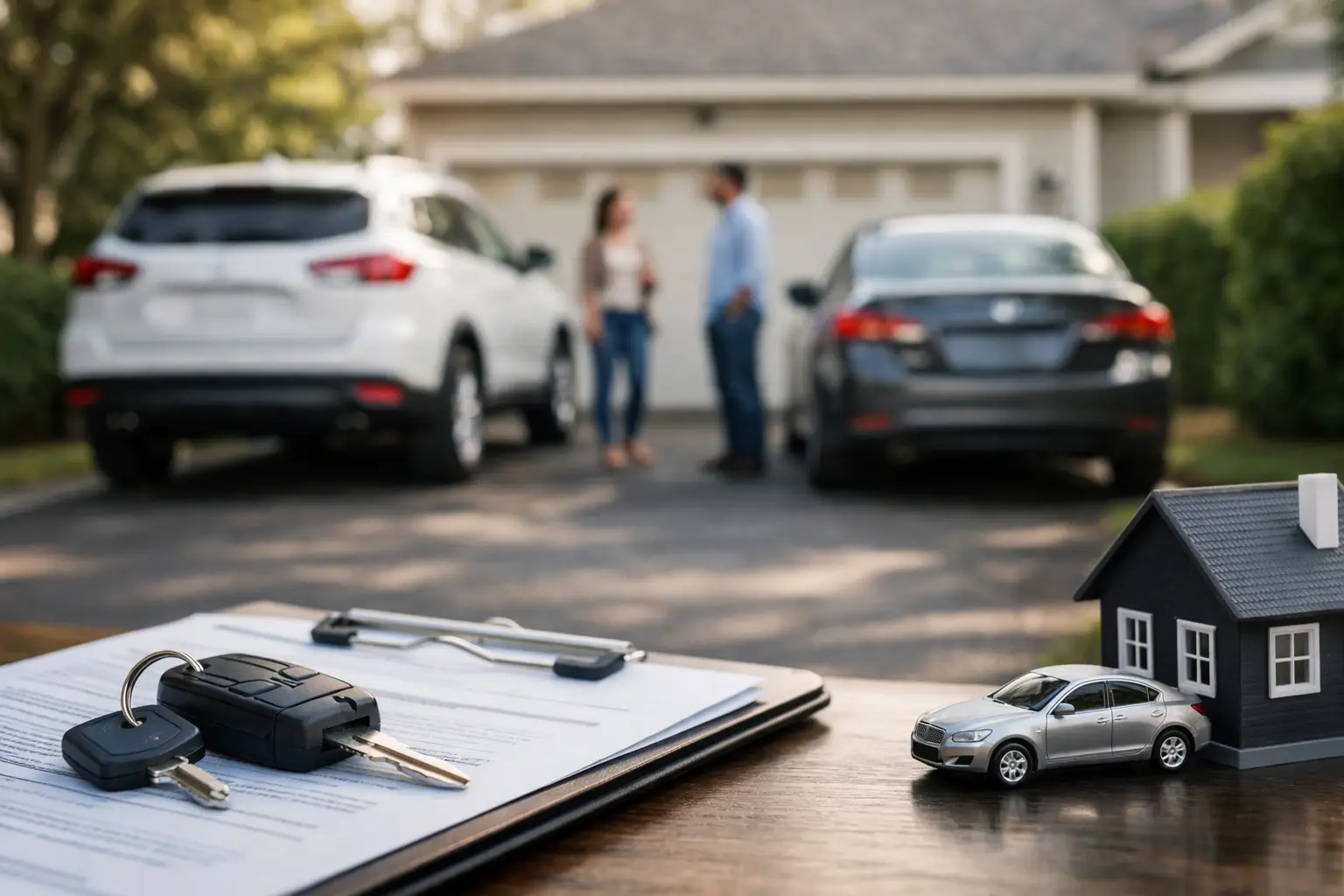
A driveway can be a useful source of income when someone nearby needs a reliable place to park. But private driveway rental insurance requirements are not one universal checklist. They depend on your state, municipality, homeowners policy, how often you rent the space, and what vehicles use it.
The practical starting point is simple: do not assume your existing insurance automatically covers paid parking. Before listing a space, understand who may be responsible if a car is damaged, a visitor is injured, or an accident happens at the edge of your property.
Start with your homeowners or landlord policy
For most homeowners, the driveway is part of the insured property. A standard homeowners policy may provide personal liability coverage if someone is hurt on your premises, but paid driveway rentals can change the situation.
Insurance policies commonly limit or exclude claims connected to business activity. Renting a space once in a while may be viewed differently from operating a regular, income-producing parking business. There is no safe assumption based on how small the payment is. An insurer decides based on the policy language, the facts of a claim, and sometimes the scale of the activity.
If you are a landlord, check the policy for the rental property rather than relying on your own personal homeowners coverage. Your lease may also control whether a tenant can rent out a driveway or assigned parking space. If the space belongs to a condo association, homeowners association, or shared property, its rules can matter just as much as the insurance policy.
Call your insurer or an independent agent before you host. Explain that you plan to accept payment for parking in a private driveway, whether the arrangement is occasional or recurring, and what types of vehicles you expect. Ask for the answer in writing or request confirmation of the relevant endorsement.
The insurance questions that need clear answers
Private driveway rental insurance requirements are really a set of coverage questions. Your policy may already help in some circumstances, may need an endorsement, or may exclude the activity altogether.
Ask your carrier these questions directly:
- Does my current policy cover liability claims connected to paid driveway parking?
- Is driveway rental treated as a business use, and does that create an exclusion?
- Would damage to a guest's vehicle be covered if it is caused by a condition on my property?
- Do I need an endorsement, a landlord policy change, or separate business liability coverage?
- Are there limits on the number of reservations, vehicles, or rental income?
- Would an umbrella policy apply, or does it exclude this activity?
The details matter. A vehicle may be damaged because a tree branch falls, a gate closes incorrectly, ice is not treated, or another vehicle backs into it. A person might slip on a wet walkway while reaching their car. These are not identical claims, and the coverage answer can change based on what happened.
Understand the driver's coverage too
The person parking in your driveway should carry their own auto insurance. Their comprehensive coverage may respond to theft, vandalism, weather damage, or a falling object. Their collision coverage may respond if they hit a fixed object or another car.
That does not remove your potential liability. If a dangerous condition on your property caused the damage or injury, the driver or their insurer may pursue a claim against you. Nor does a driver's policy necessarily cover every loss. For example, a driver without comprehensive coverage may have limited protection if a storm damages the car.
A simple, accurate listing helps set expectations. Describe the space, access route, vehicle fit, gates, lighting, surface condition, and any restrictions. Do not promise security, covered parking, or vehicle protection unless you can actually provide it. Clear information reduces misunderstandings, though it does not replace insurance.
Check state and local rules before listing
Insurance is only one part of operating a private parking space. Cities, counties, and homeowners associations may regulate paid parking, business activity from a residence, driveway access, overnight parking, signage, or the number of vehicles allowed on-site.
Rules are especially worth checking if your property is near an airport, stadium, transit station, downtown district, beach, hospital, or event venue. High-demand locations can draw more attention from local enforcement and neighbors. A permit, business license, tax registration, or zoning approval may be required in some places, while other areas may allow small-scale driveway rentals without a special permit.
If you are unsure, contact your local planning, zoning, or code enforcement office. Ask about paid parking from a residential driveway, not just general home business rules. The distinction can produce a more useful answer.
Match your coverage to the way you host
An occasional daytime booking has a different risk profile from daily commuter parking or long-term vehicle storage. More traffic means more chances for a backing collision, blocked access, surface wear, and neighbor concerns. Overnight parking can add theft, noise, lighting, and snow or ice exposure in colder states.
Consider separate or higher-limit coverage when the arrangement becomes frequent, income is meaningful, larger vehicles are involved, or customers access areas beyond the driveway. Commercial auto activity, vehicle repair, towing, valet service, and storing vehicles for extended periods can create risks beyond a straightforward parking rental.
An umbrella policy can increase liability limits above qualifying home or auto policies, but it is not a shortcut around an exclusion. Ask whether the underlying policy covers driveway rental first. If it does not, the umbrella may not help with a related claim.
Reduce avoidable risk around the space
Insurance handles covered losses after they happen. Basic property upkeep can help prevent the claim in the first place. Keep the parking area clear, mark the boundaries if needed, repair obvious pavement hazards, and make sure drivers can enter and exit without crossing unsafe areas.
For recurring rentals, document the condition of the space with dated photos. Keep records of maintenance, such as snow removal or repairs, and save booking messages. If an incident occurs, write down what happened while details are fresh and report the claim promptly to the appropriate insurer.
You should also set practical rules for users: no blocking sidewalks, fire hydrants, mailboxes, garages, or neighboring driveways; no vehicle repairs; no hazardous materials; and no oversized vehicles that do not fit safely. Rules will not erase liability, but they make the arrangement easier to manage.
Do not rely on assumptions about marketplace coverage
A platform may offer certain protections, but those protections can have limits, deductibles, exclusions, eligibility requirements, and claim procedures. Read the current terms for any marketplace you use, including Spot-Me.us, and treat them as separate from your own home, landlord, auto, or business insurance.
The best approach is to know what coverage applies before the first booking. Tell your insurer exactly what you are doing, confirm local rules, and only offer a space you can maintain safely. Your space can meet their need without creating a surprise you did not plan for.