A driver may decide whether to book your space in a few seconds. They look for one thing first: can I get in, park, and leave without a surprise? When you prepare a safe parking spot, you are not trying to create a commercial garage. You are making your available space clear, usable, and dependable for someone who needs it.
That can turn an overlooked driveway, side lot, reserved stall, or small business space into something genuinely useful. Safety is also practical. It reduces confusion at arrival, protects your property, and gives drivers a better reason to return.
Start with a space that is truly usable
The best parking spot is not always the biggest one. It is the one a typical driver can enter and exit without tight turns, blocked sightlines, or guesswork. Walk the full route as if you were arriving for the first time, including after dark. Start at the street, not at the spot itself.
Check whether a car can make the turn from the road without crossing landscaping, clipping a post, or backing into traffic. A narrow alley, steep driveway, or space behind a gate may still work, but only if the access is clear and you describe it accurately. Do not promise an easy fit for every vehicle when the spot is better suited to compact cars or standard sedans.
Look at the parking surface next. It should be stable enough for regular vehicle weight and free of hazards that can damage tires or cause a person to trip when getting out. Fill significant potholes, address loose gravel, and remove low branches or objects that hang into the driving path. If drainage leaves standing water after rain, solve that issue before offering the space whenever possible.
A spot should also have enough room for doors to open. Drivers need to get out without squeezing against a fence, wall, dumpster, or another vehicle. If that is not possible on both sides, make the layout and best parking position very clear.
Match the spot to the right vehicle
Be specific about what belongs in your space. A small residential driveway may be a good match for a commuter car but not a pickup with a long bed, a large SUV, or a van. A business lot may have wider stalls but restricted hours. Accuracy protects both sides of the booking.
If you measure, measure the usable width and length, not the widest point of an irregular space. Include clearance issues such as a low tree canopy, overhead structure, tight gate, or sharp turn. A driver who knows what to expect can decide quickly. A driver who arrives to find a mismatch creates an avoidable problem.
Prepare a safe parking spot with clear access
A safe space begins before the vehicle reaches it. Drivers should be able to identify the entrance, understand where to go, and know what they need to do on arrival. If your driveway is easy to miss, a simple description of a nearby visual marker can prevent sudden stops or last-second turns.
Keep the entrance clear. That means no trash bins, sports equipment, delivery boxes, planters, or personal vehicles narrowing the path. In a shared driveway or lot, confirm that your offered space does not block a neighbor, loading area, fire access route, sidewalk, or required exit.
If the space is behind a gate, decide how access will work before you list it. A code, remote entry process, or scheduled opening can work. What matters is that the driver is not left waiting in the street with no way in. Change access codes when needed and avoid sharing more property access than the parking arrangement requires.
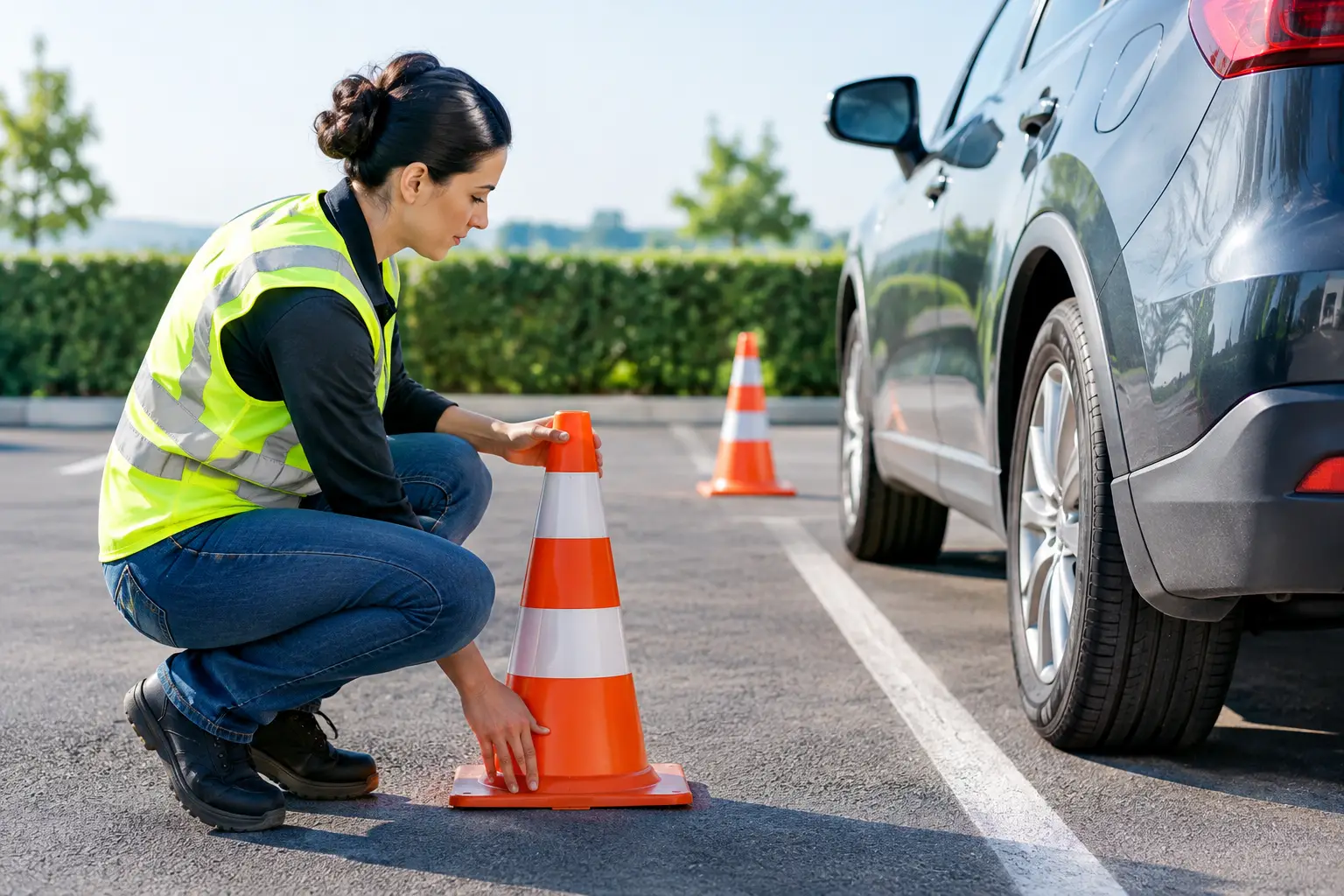
Good directions are short and useful. Tell drivers which entrance to use, where exactly to park, and whether they should back in or pull forward. If there is a space number, painted line, cone, or other marker, make sure it is visible and consistent with your instructions.
Make lighting work when it matters
Many parking issues happen after sunset. Poor lighting makes curbs, uneven pavement, steps, and obstacles harder to see. It also makes a first-time visitor less confident about leaving their vehicle.
You do not need stadium lighting. A working exterior fixture, motion-sensor light, or well-placed light near the parking area can make a major difference. The goal is to illuminate the entry route, the space itself, and the path a person uses to leave the vehicle.
Check lights at night rather than assuming they cover the area. A fixture may brighten the house while leaving the parking surface dark. Replace burned-out bulbs, trim vegetation that blocks light, and aim fixtures away from neighboring windows and drivers' eyes. Too much glare can be almost as unhelpful as too little light.
If your spot has no practical nighttime lighting, be honest about it. It may still be appropriate for daytime parking or for drivers comfortable with the conditions. Clear expectations are better than a polished description that does not match the experience.
Remove avoidable hazards
A clean, orderly space signals that you take the arrangement seriously. It also gives drivers fewer things to navigate. Before each new booking period, scan the spot for broken glass, nails, tools, loose cords, toys, branches, oil patches, and other debris.
Pay attention to the walking path, not just where tires go. A driver may step out on the passenger side, walk around the vehicle, or carry bags. Mark or repair abrupt surface changes where you can. If a curb, wheel stop, or step cannot be changed, make it visible with lighting, paint, or a clear note.
Weather changes the standard. Sweep leaves that become slippery when wet, remove snow and ice where required, and keep drainage channels open. In areas with frequent storms, inspect the spot after high winds for fallen limbs or damaged fixtures. A space that was safe last week may not be safe today.
Set simple rules that protect everyone
Parking rules should answer the practical questions before they become texts, calls, or conflicts. State the usable hours, whether overnight parking is allowed, where the vehicle must sit, and what should never be blocked. If there are quiet hours, gate rules, or a requirement to display a permit, say so plainly.
Avoid rules that are vague or overly personal. “Be respectful” is reasonable, but it does not tell someone whether they can arrive at 10 p.m. or leave a car for three days. A better approach is direct: use the marked space only, keep the driveway entrance open, and do not leave valuables or trash outside the vehicle.
You should also decide how to handle problems. Provide a reliable way for the driver to reach you if they cannot access the spot or find an unexpected obstruction. At the same time, set reasonable boundaries. Parking access does not mean access to your home, building, yard, or private amenities unless you have explicitly agreed to that.
Confirm local requirements before listing
Rules vary by city, neighborhood, property type, and lease. Some homeowners associations, landlords, zoning rules, or local ordinances limit paid parking, overnight vehicle storage, commercial activity, or street access. A shared property may have its own approval requirements.
Review the rules that apply to your location before making the space available. It is also wise to understand your insurance coverage and any platform requirements. If a restriction makes the arrangement unsuitable, do not try to work around it with unclear instructions. The right space is one you can offer openly and confidently.
Maintain the experience after the first booking
Preparation is not a one-time task. A reliable spot stays reliable because someone checks it. Build a quick routine around the things that change: lighting, debris, weather, access, and vehicles that may have drifted into the space.
Before an expected arrival, move your own car, bring in bins, and confirm that the spot is still available. If something changes, communicate early. A temporary construction project, blocked driveway, or broken gate can be manageable when the driver knows before they arrive. It is far more frustrating at the curb.
Photos should stay current as well. If you repaint lines, change the entrance, add a gate, or remove a tree, update the description and images. The goal is simple: what a driver sees online should match what they see when they pull up.
Spot-Me.us is built around a practical exchange: your space meets their need. The strongest listings make that exchange easy. A clean route, clear instructions, honest vehicle fit, and consistent upkeep show a driver they have found more than an empty patch of pavement. They have found a spot they can count on.
Start with one walk from the street to the space tonight. The small issue you notice before a driver arrives may be the reason your parking spot becomes the one they choose again.