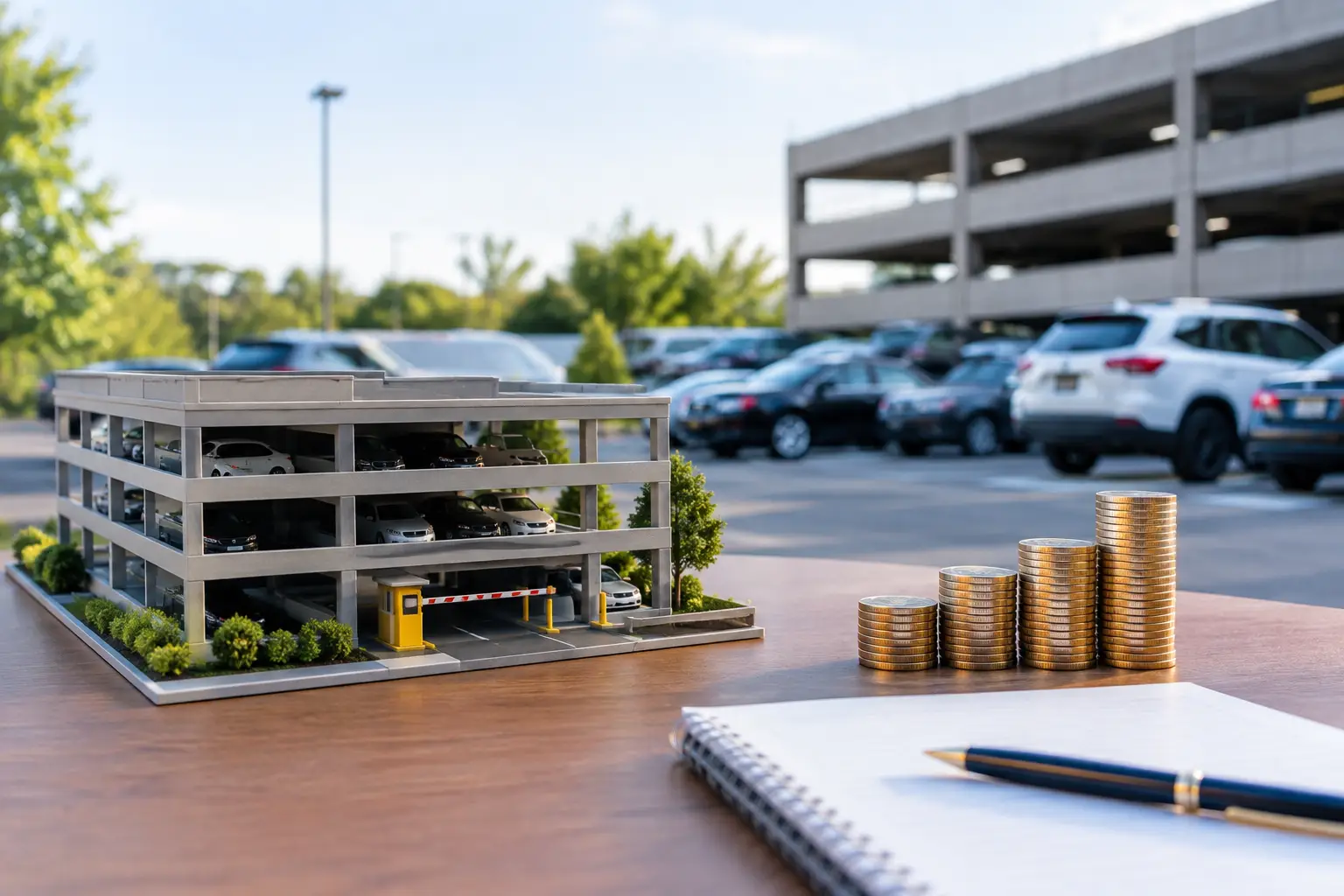
A driveway that sits empty during the workday can be more than unused pavement. The same is true for a church lot after morning services, a small business space overnight, or an apartment building’s open stall. Is parking profitable? It can be, but the space itself is only part of the answer. What matters most is whether people nearby need a reliable place to park often enough to pay for it.
For many property owners, parking income is not about building a garage or becoming a full-time operator. It is about making an existing spot useful. Your space. Their need. One spot.
Is Parking Profitable for Your Property?
Parking is most profitable when convenience is scarce. A spot near a commuter rail station, hospital, stadium, downtown office, university, airport route, beach, or event venue can solve a recurring problem for drivers. In those locations, a reserved space may be worth more than a larger but less convenient space several blocks away.
The key question is not, “What could I charge?” Start with, “Who needs this spot, and when?” A homeowner near a weekday commuter corridor may have steady Monday-through-Friday demand. A business with a lot near a concert venue may earn more on a few high-demand nights. An apartment owner may find that monthly parking is more predictable than daily bookings.
A spot can also be valuable in quieter areas if local parking is limited. Narrow streets, permit zones, new construction, and dense neighborhoods can create demand even without a major destination next door.
The Math Behind Parking Income
Gross income is simple: your price multiplied by the number of paid reservations. Profit is what remains after the costs and effort of making the spot available.
Say you rent a space for $12 per weekday and fill it 18 days a month. That is $216 in gross monthly income. At $20 per day for the same 18 days, it becomes $360. A monthly arrangement could be steadier: $175 to $300 or more, depending on the location and the local market.
Those figures are examples, not promises. Rates can change sharply from one neighborhood to the next. A space two blocks from a stadium may command event pricing, while a similar driveway farther away may have little demand. The best price is one that reflects real alternatives for drivers: street parking, garages, permits, transit access, and the time it takes to find an open spot.
Do not judge profitability only by your highest possible rate. A $25 daily price that attracts a reservation twice a month may earn less than a $12 price that fills consistently. Reliable demand usually matters more than an ambitious listing price.
Think in net income, not just daily rates
Most owners have low operating costs because the space already exists. Still, account for transaction fees, added lighting, signage, snow or leaf removal, maintenance, and any time spent responding to questions. If you are offering a covered space, gate access, security features, or electric vehicle charging, those benefits may support a higher rate, but they can also add expense.
Taxes matter too. Parking income may be taxable, and deductible expenses depend on your situation. Keep clear records of reservations, payouts, and expenses, then ask a qualified tax professional how the income applies to you.
What Creates Real Demand?
Location starts the conversation, but access finishes it. Drivers want to know they can enter, park, and leave without uncertainty. A space that is difficult to find, blocked by another vehicle, too tight for standard cars, or subject to changing restrictions will be harder to rent, even in a busy area.
A profitable spot should be accurately described. State whether it is a driveway, assigned stall, garage space, lot space, or curbside area where permitted. Include usable dimensions when larger vehicles may be an issue. Be clear about hours, overnight access, gate instructions, and whether the reservation is for a single event, a workday, or a month.
Good demand often falls into three patterns. Commuter demand is recurring and usually strongest on weekdays. Event demand can produce higher prices but may be irregular. Residential demand is often monthly and can be the easiest to plan around. Knowing which pattern applies to your space helps you set availability without giving up your own flexibility.
Pricing a Space Without Guessing
Start by looking at the practical competition around you. Consider nearby garages, public lots, street restrictions, and private spaces. You are not required to be the cheapest option. A space that is closer, reserved, easier to enter, or available when public lots fill up has a clear advantage.
For a new listing, a competitive starting price can help you learn how drivers respond. If the spot is booked quickly and often, test a modest increase. If it receives views but no reservations, the issue may be price, but it may also be unclear instructions, limited availability, or a weak description.
Use different prices when the demand justifies it. Weekday commuters, weekend visitors, and major events do not always value the same spot the same way. A flexible schedule can make parking more profitable without requiring you to rent your space every day.
Avoid pricing that creates friction. Surprise charges, unclear time limits, or rules that are only shared after booking can turn a convenient space into a bad experience. Clear terms encourage repeat use, and repeat users reduce the work of finding the next reservation.
Costs, Rules, and Risks to Check First
Before offering parking, confirm that you have the right to do so. Homeowners should review local zoning rules, neighborhood association requirements, lease terms, and any restrictions on commercial activity. Landlords and business owners should also consider tenant rights, customer access, fire lanes, accessibility requirements, and existing parking commitments.
Insurance deserves a close look. Your current policy may not cover every situation connected to paid parking, especially if a vehicle is damaged or someone is injured on the property. Ask your insurer what applies to occasional or recurring paid use, and keep the space in safe condition.
A few practical details can protect both income and trust:
- Keep the area well marked, clear of hazards, and usable in the weather common to your area.
- Set access instructions that a first-time visitor can follow without calling you.
- Do not promise security, covered parking, or vehicle monitoring unless you actually provide it.
- Reserve enough time for your own car, deliveries, tenants, or customers when your needs come first.
The point is not to make a simple arrangement complicated. It is to avoid preventable problems that can erase the value of a few bookings.
When Parking May Not Be Worth It
Not every open space should become a paid one. If demand is weak, access is difficult, or the spot interferes with daily life, the income may not justify the effort. A low-price arrangement that regularly blocks your driveway, creates neighbor conflict, or requires constant coordination is not truly passive income.
Parking may also be less attractive when your space is needed unpredictably. If you frequently host clients, have multiple household vehicles, or rely on the space for deliveries, it can be better to offer only selected hours or event dates. Flexibility is part of the value for owners, too.
For spaces with clear local demand, Spot-Me.us can make the basic exchange easier: an available space meets someone who needs it. The strongest listings are simple, accurate, and dependable.
A profitable parking space does not need to be perfect. It needs to be useful at the right time, in the right place, with terms that work for you. Start with the days you can comfortably offer, price for real demand, and let the space earn only when it makes sense.