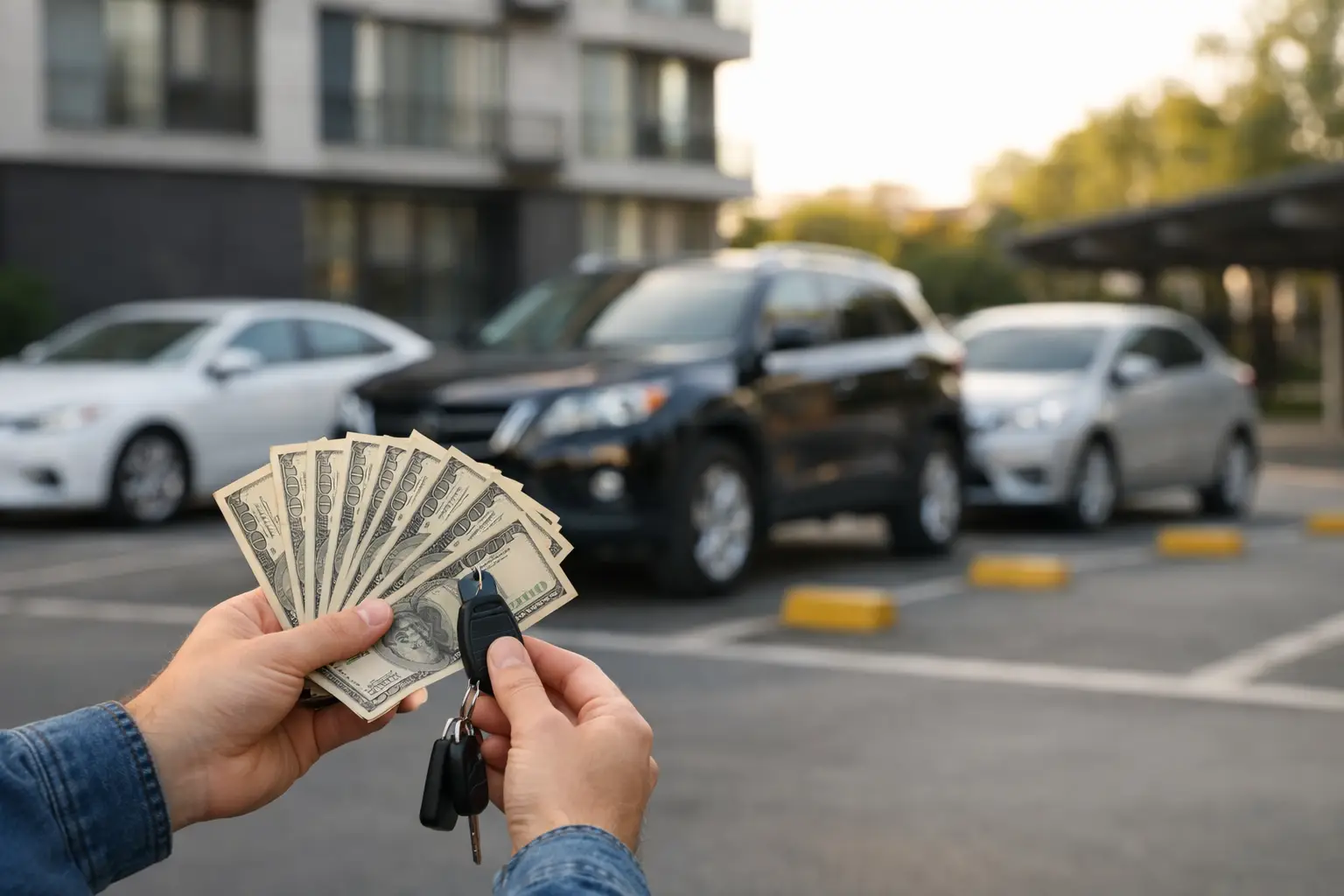
A driveway that sits empty while you are at work, a reserved space behind a storefront, or an unused lot space near a busy venue can solve a real local problem. Learning how to rent out parking space starts with one question: can a driver use your spot easily, legally, and without disrupting your day?
The best parking rentals are simple. The driver knows where to go, what they are paying for, and when the space is available. You know who is using it, when they will leave, and how to get help if something goes wrong. Your space. Their need. One spot.
Start with a spot worth renting
Not every open area is ready for a renter. A usable parking space needs safe vehicle access, enough room to park without blocking others, and a clear path in and out. A narrow driveway that requires backing into traffic may work for an occasional compact car, but it is not a good fit for daily commuter parking. Be honest about those limits from the start.
Location matters as much as size. Spaces near downtown offices, hospitals, airports, stadiums, transit stations, apartment buildings, colleges, and event venues often have stronger demand. A spot in a quieter area can still be valuable if it is close to a workplace, school, or neighborhood with limited street parking.
Think about availability, too. A space that is open every weekday from 7 a.m. to 6 p.m. may be ideal for a commuter. A space available only during evening events may command a higher rate on busy nights. Consistency is valuable, but limited availability can work when the timing matches a real need.
Check the rules before you list
Your ability to rent a parking space depends on where it is located and who controls the property. Review local parking rules, zoning requirements, homeowners association rules, lease terms, condominium policies, and any building restrictions. Some communities limit commercial activity, overnight parking, large vehicles, or the use of common-area spaces.
If you rent your home or manage a space for someone else, get permission in writing before offering it. If the spot is assigned to a unit in a shared garage or lot, confirm that the assignment includes the right to let another driver use it. A good opportunity is not worth a dispute with a landlord, neighbor, or property manager.
Also consider basic liability and insurance questions. Your existing policy may not cover every situation involving a paying parker. Read your policy, ask your insurer what applies, and use a marketplace with clear booking terms and support. Local rules and coverage vary, so this is one area where a quick check can prevent an expensive surprise.
How to rent out parking space with a clear setup
Once you know the space can be rented, prepare it as if you were arriving there for the first time. The goal is not to make it fancy. The goal is to make it obvious.
Clear away bins, equipment, loose gravel, low branches, and anything that narrows the parking area. Mark the boundaries if a driver could confuse your space with a neighbor's. If access involves a gate, garage, security desk, or alley entrance, make the instructions specific enough for someone who has never visited the block.
Use recent photos taken in daylight. Show the entrance from the street, the full parking space, and any detail that affects access. A photo of a tight turn, low clearance, or gate is more useful than a polished photo that hides it. Drivers want certainty, especially when they are arriving before work, catching a flight, or heading to an event.
Your listing should answer the practical questions upfront: the address or meeting point, space dimensions or vehicle limits, availability, entry instructions, whether the space is covered, and whether overnight parking is allowed. State restrictions plainly. For example, say “sedans and small SUVs only” if a full-size truck will not fit, or “no in-and-out access after 10 p.m.” if the driveway is shared.
A peer-to-peer marketplace like Spot-Me.us can make the match more straightforward by putting available space in front of people who already need a spot. Even then, accurate details are what turn a view into a booking and a booking into a repeat customer.
Set a price that fits the demand
Pricing is where many new hosts either leave money behind or make their listing easy to skip. Start by looking at nearby paid parking and private spaces with similar access, hours, and convenience. A covered space close to an office entrance should not be priced like an uncovered space several blocks away. On the other hand, a new listing with no booking history may need a competitive starting price.
Choose a rate that matches how the space will be used. Hourly or event pricing can make sense near venues, restaurants, and entertainment districts. Daily pricing is often useful near airports, hospitals, and tourist areas. Monthly pricing fits commuters, apartment residents, and employees who need a dependable routine.
Do not price based on your entire property value. Price the parking experience. A driver is paying for proximity, predictability, safety, and saved time. If your spot eliminates a 15-minute search for street parking, that convenience has real value.
Review your rate after a few weeks. If you receive steady bookings quickly, test a modest increase. If the space stays empty, check whether the price, photos, hours, or instructions are creating friction. Sometimes lowering the rate is right. Sometimes the better fix is clarifying that the space is closer to the destination than drivers assume.
Make trust part of the listing
Parking is a small transaction with a big dependence on trust. A driver needs confidence that the space will be there. You need confidence that the driver will use it as agreed.
Set simple expectations before the booking begins. Include arrival and departure windows, vehicle-size limits, whether the driver may leave the car overnight, and what to do if they are delayed. If a permit, dashboard sign, gate code, or call box is involved, explain exactly how it works and when the information will be provided.
Keep communication short and useful. Confirm the booking, provide the access steps, and give one reliable way to reach you if the driver cannot find the entrance. You do not need to be available around the clock for every question, but you should have a plan for predictable problems such as a blocked driveway, a wrong turn, or a late departure.
For recurring renters, consistency matters more than constant contact. A clean, available spot with the same access routine each day is what makes someone want to keep booking. Reliable parking becomes part of a person's schedule fast.
Protect your time and your property
A rental should create income, not a new daily chore. Build boundaries that fit your routine. If you do not want strangers knocking on your door, use clear arrival instructions and avoid handoffs. If your family needs the driveway on weekends, make those dates unavailable rather than trying to manage exceptions after someone has booked.
Inspect the space periodically, especially after storms, construction nearby, or seasonal changes. Snow, leaves, standing water, fading markings, and broken lighting can change whether a space is safe or usable. If the space is temporarily unavailable, update it right away. Canceling late damages trust and can leave a driver scrambling.
Keep a simple record of bookings, payments, expenses, and any communication about incidents. This helps you see whether the rental is worth the effort and gives you useful documentation at tax time. Income from parking may have tax implications, while certain expenses may be relevant as well. A qualified tax professional can help with your specific situation.
Know when to say no
Some spaces are better left private. Do not rent out a spot if it blocks emergency access, interferes with a neighbor's legal access, creates an unsafe backing situation, violates your property rules, or requires you to bend your own schedule every day. The right rental arrangement should feel manageable for both sides.
It is also fine to limit who can book. If your space only works for small vehicles, daytime parking, or monthly renters, say so. Clear limits attract the right driver and reduce the chance of conflict.
An unused parking space can become useful income when the details are handled well. Make the spot easy to find, easy to use, and easy to trust. The right driver is not looking for more parking options. They are looking for one spot that works.