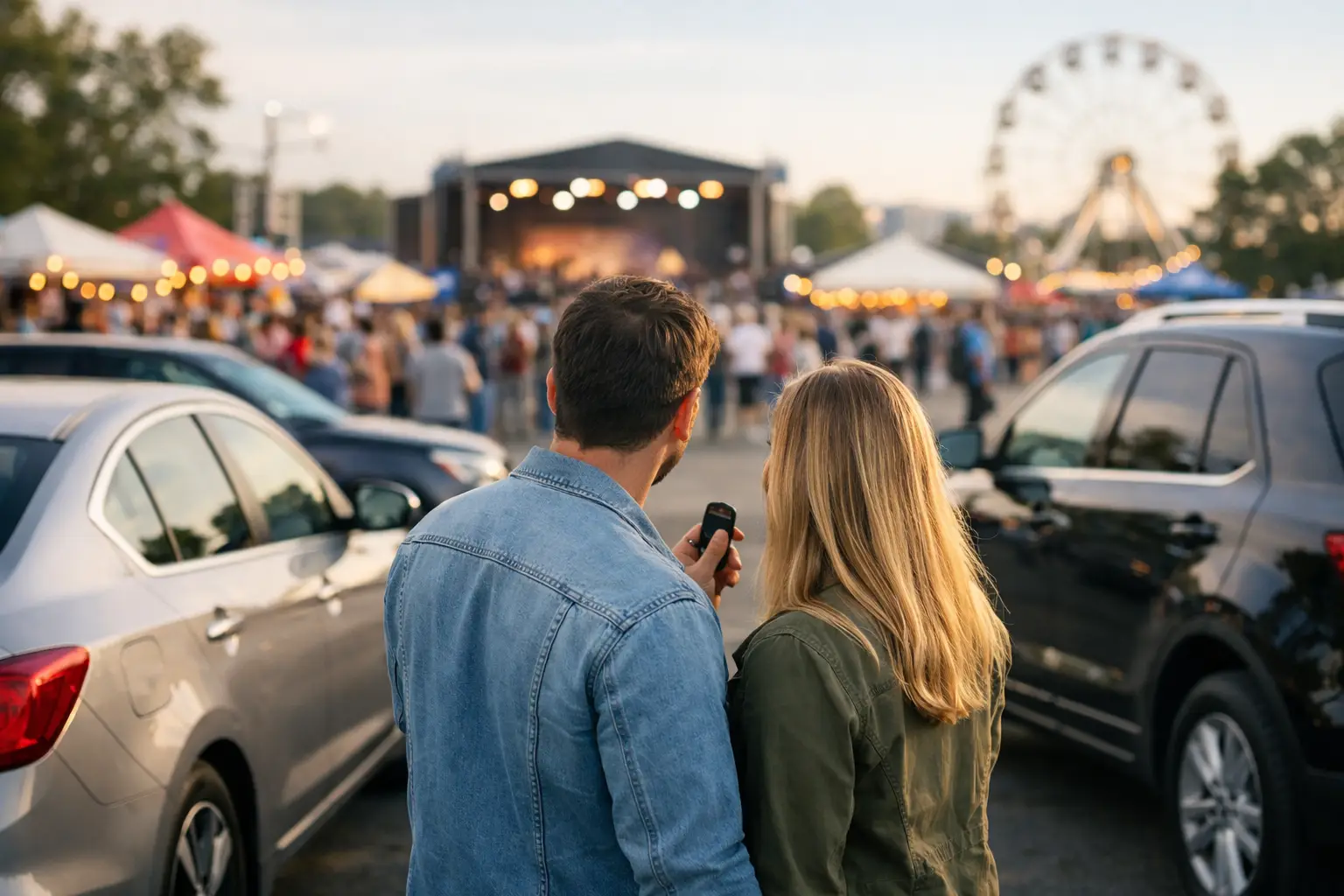
A great local event can start badly in the last half-mile. Streets narrow, garages fill, traffic slows, and every turn seems to lead farther from the entrance. The best way to find parking for local events is to make the parking decision before you join the rush.
That does not always mean choosing the closest garage. It means choosing a spot that fits the event, your arrival time, your group, and how quickly you need to leave afterward. A reliable spot a short walk away can be far better than circling for an opening at the door.
Start with the event, not the parking lot
First, get clear on the event’s real schedule. The listed start time is not always the time the area gets busy. A high school football game may build traffic 30 minutes before kickoff. A downtown concert can create backups an hour or more before doors open. A festival may have several arrival waves throughout the day.
Look at the venue location and identify its main entrance, not just its street address. Many arenas, fairgrounds, campuses, and parks cover several blocks. Parking on the wrong side of a venue can turn a five-minute walk into a twenty-minute one, especially if fences, rail lines, or crowded intersections are in the way.
Then decide what kind of arrival you need. If you are meeting friends, bringing children, carrying gear, or need accessible parking, convenience may be worth paying more for. If you are attending alone and do not mind walking, a space farther out may offer a faster arrival and exit.
How to find parking for local events before it fills
The simplest advantage is time. Check parking options as soon as you commit to the event, particularly for recurring events with known crowds: concerts, games, holiday markets, parades, graduations, and neighborhood festivals. The closer the event date gets, the fewer good choices remain.
Search the streets around the venue in rings rather than focusing on one garage. Start with the closest blocks, then expand outward until you find a location that balances walking distance, price, and a clear route in. A spot two or three blocks from the busiest intersection can save time because you avoid the heaviest traffic bottleneck.
Private spaces are often worth considering when public lots are limited or confusing. A driveway, reserved space, or small private lot near the destination can offer a more direct option than competing for the same garage entrance as everyone else. Spot-Me.us is built around that simple exchange: an available local space can meet a driver’s immediate need.
Do not assume every available-looking space is open to event parking. Residential zones may have permit restrictions, short time limits, or rules that change on weekends and event days. Read signs carefully. A cheaper space is not a deal if you return to a ticket, tow, or a rushed departure before the event ends.
Choose the right spot for your plans
The closest space is not automatically the best space. Think about what happens before and after the event.
For a short event, close parking can make sense, especially when you have a tight schedule. For a long concert, game, or festival, a slightly longer walk may be easier on both ends of the trip. You can arrive from a less congested direction, park without circling, and leave without waiting in a garage line.
Exit traffic matters more than many drivers expect. Thousands of people leaving at once can turn a nearby garage into a long wait. When comparing options, consider whether the spot gives you a clean route away from the venue. Parking north of a stadium may be ideal if you are heading north afterward, but less useful if all the post-event traffic pushes toward the same freeway ramp.
Also consider the conditions. A ten-minute walk is reasonable for many people on a mild afternoon. It is different in heavy rain, summer heat, snow, or late at night. If the event ends after dark, choose a route you are comfortable walking and a location you can identify easily when you return.
Confirm the details that prevent bad surprises
Once you find a promising option, check the basics before you leave home. Confirm the exact address, entry instructions, price, permitted arrival and departure times, and whether the space fits your vehicle. A compact car and a full-size pickup do not need the same clearance.
Know whether you are reserving a specific spot or taking a first-come space. That distinction is especially important near major events. A reservation can reduce uncertainty, while a first-come option may be less expensive but carries more risk if traffic delays you.
Save the details where you can access them quickly. Screenshot the address, parking instructions, and any confirmation. Cell service can get slow when a crowd arrives or leaves at the same time. It also helps to note a nearby landmark so you can find your vehicle after an event when every block looks different.
Payment is another practical detail. Some locations use mobile payment, others take cards, and some private arrangements may have their own instructions. Do not wait until you are blocking an entrance to sort it out. A minute of preparation keeps the line moving for everyone.
Build in a buffer, then stop circling
For popular local events, aim to arrive 20 to 40 minutes earlier than you think you need to. The right buffer depends on crowd size and venue access. A small community theater may need little extra time. A downtown parade, a sold-out show, or a campus event during rush hour needs more.
If your first choice is unavailable, have a backup area in mind. Not one backup space necessarily, but a second parking zone with a sensible walking route. This keeps you from making stressed, last-second turns through streets you do not know.
Once you have a safe, legal spot that works, take it. Circling for a closer space often costs more time than the extra few blocks would have. It adds traffic, raises stress, and can make you late for the part of the event you came to enjoy.
For space owners, event days are a local opportunity
A driveway, unused business space, or open lot near a venue can become more valuable when an event brings demand to the neighborhood. For owners, the appeal is straightforward: a space that would otherwise sit empty may help a visitor get where they need to go and create extra income.
The best spaces are easy to identify and simple to access. Clear availability, accurate vehicle-fit information, and straightforward arrival instructions make a major difference. Drivers are looking for certainty when the streets are busy. Owners who provide it help create a better experience for the whole area.
Event demand is not the same every week, and that flexibility is part of the advantage. A space can be available for a weekend market, a game night, or a seasonal festival without becoming a full-time commitment. Your space. Their need. One spot.
The next time an event is on your calendar, treat parking as part of the plan, not an errand for the final few minutes. A spot chosen with care gives you something valuable before the event even begins: the freedom to arrive ready.